What to eat before and after a workout
What you eat right before and after training can change how a session feels. Here's what the evidence says about fueling and recovering around a workout.
Most of the advice on this shelf is about your whole day: total calories, total protein, your overall phase. This piece zooms in on the hour or two around your session, because what you eat there changes how the workout actually feels.
Why fuel matters before you train
Your muscles store carbs as glycogen, and that's the fuel they reach for first in a hard set or a tough run. A high-carb meal eaten a few hours before exercise raises how much glycogen you start with, which gives you more to draw on once things get demanding. For most gym sessions this isn't a dramatic effect, but for anything over about 90 minutes at a solid intensity, it's commonly recommended to eat carb-rich snacks or meals in the hours beforehand.
If you train first thing in the morning on an empty stomach, you're not doing anything wrong. Some people genuinely feel sick if they eat too close to a session. The point isn't a rule, it's noticing whether you run out of steam partway through and testing whether a small carb snack an hour or two earlier changes that.
What actually happens after you train
After a session, your body is working to refill the glycogen you used and repair the muscle you worked. Replacing lost muscle glycogen is a key goal of recovery, and the research there is well established. You don't need a special shake to do this. A normal meal with carbs and protein within a few hours covers it for almost everyone training at a recreational or serious amateur level.
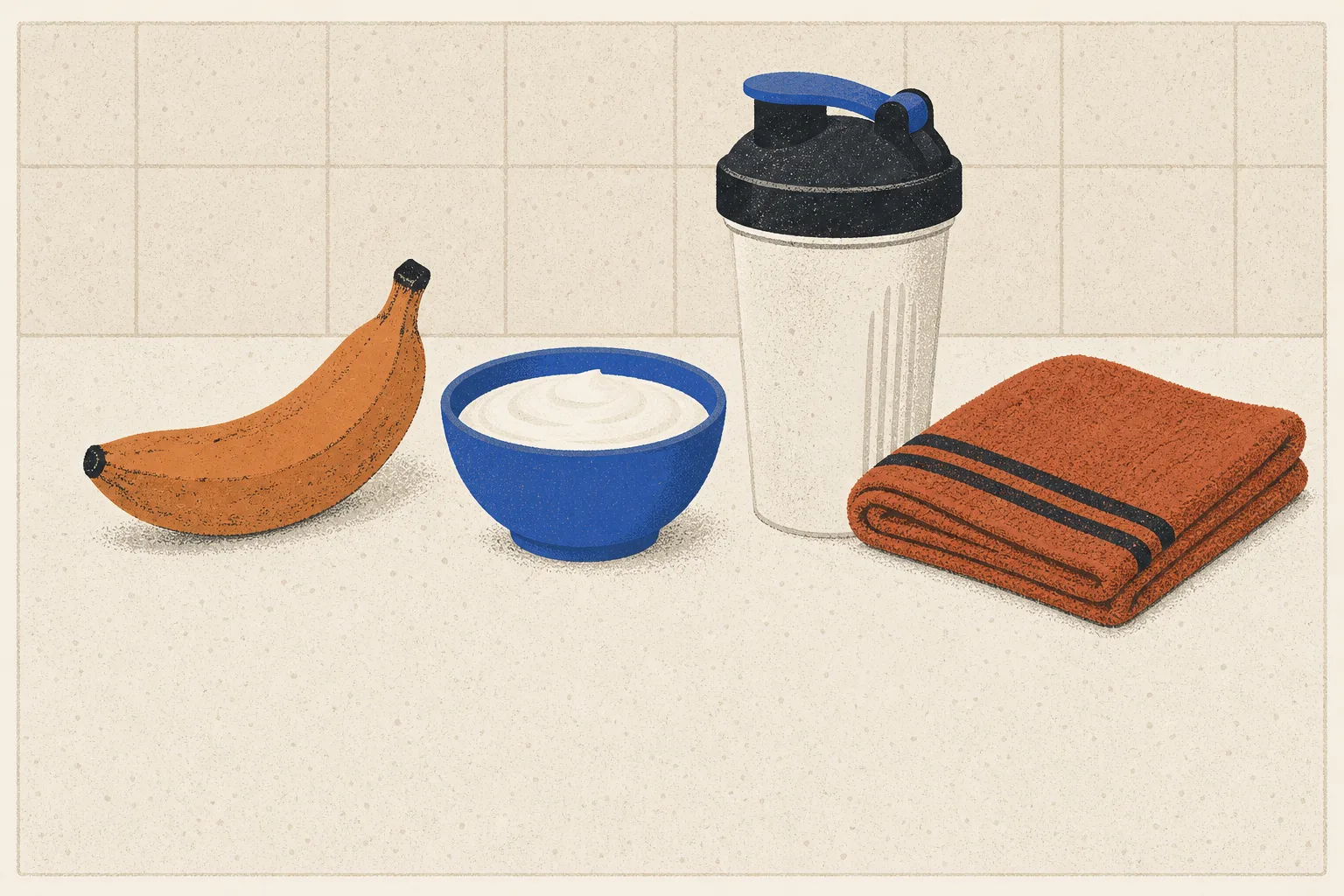
On protein specifically, a dose of around 20 to 40 grams of a high quality protein, or about a quarter gram per kilogram of bodyweight, is a sensible target for a post-workout meal. That's roughly a chicken breast, a couple of eggs with some yogurt, or a scoop of whey in milk. More than that in one sitting doesn't seem to add much extra benefit for muscle repair.
A few hours before Have a meal with some carbs if you're training hard or long, lighter if your session is short.
Right before, if needed A small snack is fine if you feel low on energy, but it's not required for most sessions.
Within a few hours after Eat a normal meal with protein and carbs. There's no narrow window you have to hit.
Across the rest of the day Your total food for the day matters more than exact timing around the gym.
Timing around a workout is about how the session feels, not a hidden rule you have to follow.
Hydration and the bigger picture
Being badly dehydrated before or during a session can make it feel harder than it should, but this shelf has a separate piece on exactly how much hydration matters, so we won't repeat it here. The short version for this piece: drink when you're thirsty and you're training for an hour or less, and don't treat a sports drink as essential for a normal gym session.
None of this replaces what you eat the rest of the day. If your total calories and protein are off for your phase, no amount of clever timing around training will fix that. Think of pre and post workout food as fine tuning, not the main dial.
Sources
- International society of sports nutrition position stand: nutrient timing Journal of the International Society of Sports Nutrition
- International Society of Sports Nutrition Position Stand: protein and exercise Journal of the International Society of Sports Nutrition
- Carbohydrates, Physical Training, and Sport Performance Strength & Conditioning Journal