Can you build muscle and lose fat at the same time
Can you really lose fat and build muscle at the same time. Here's what the research on body recomposition says, and how to read a scale that won't move.
For years the standard advice was pick a lane. Eat extra to build muscle, or eat less to lose fat, but never expect both at once. That advice is outdated. A growing pile of studies now shows trained people can gain muscle and lose fat in the same stretch of weeks, a pattern researchers call recomposition. It just needs the right conditions, and it's slower than either goal on its own.
What recomposition actually means
Recomposition is simply losing body fat while your muscle stays the same or grows a bit, often with your scale weight barely moving. Body recomposition is commonly defined as the simultaneous process of reducing body fat while maintaining or increasing lean mass, frequently with no changes in total body mass. It's not a new discovery, researchers have been studying this exact pattern for decades, it's just become a popular term more recently.
The old thinking, sometimes called calories in versus calories out, treated fat loss and muscle gain as opposites. But many chronic trials in resistance-trained people have shown body recomposition really happens, especially once you add resistance training and pay attention to protein.
The two levers that make it work
One study put resistance-trained people on two different plans: a small calorie deficit with high protein, or eating at maintenance calories with high protein. Both groups lost fat and gained a little muscle. A moderate energy deficit combined with a protein intake of 2.5 grams per kilogram of body weight promotes fat loss while increasing lean mass, and cutting calories a bit further didn't cost people any extra muscle compared with eating at maintenance.
Protein is the part that matters most here. Research in older women training with weights found that protein intake acts as a moderating factor for recomposition, with a low intake giving a less favorable result. The exact number that suits you will vary with your size and how much you're training, but the studies above used somewhere around 2 to 2.6 grams of protein per kilogram of body weight, well above what most casual eaters get by accident.
Set a small deficit, not a steep one A modest calorie cut, around 250 to 300 calories below what keeps your weight steady, is easier to hold onto muscle through than a harsh one.
Push protein higher than usual Aim well above the general healthy-adult minimum, closer to the ranges used in the recomposition studies, spread across your meals.
Keep lifting hard The muscle side of this only shows up when training stays consistent and challenging, calories alone don't build it.
Judge progress over months, not weeks Because scale weight can stay flat, you need a longer window and other signals to see it's working.
Reading the scale when nothing seems to move
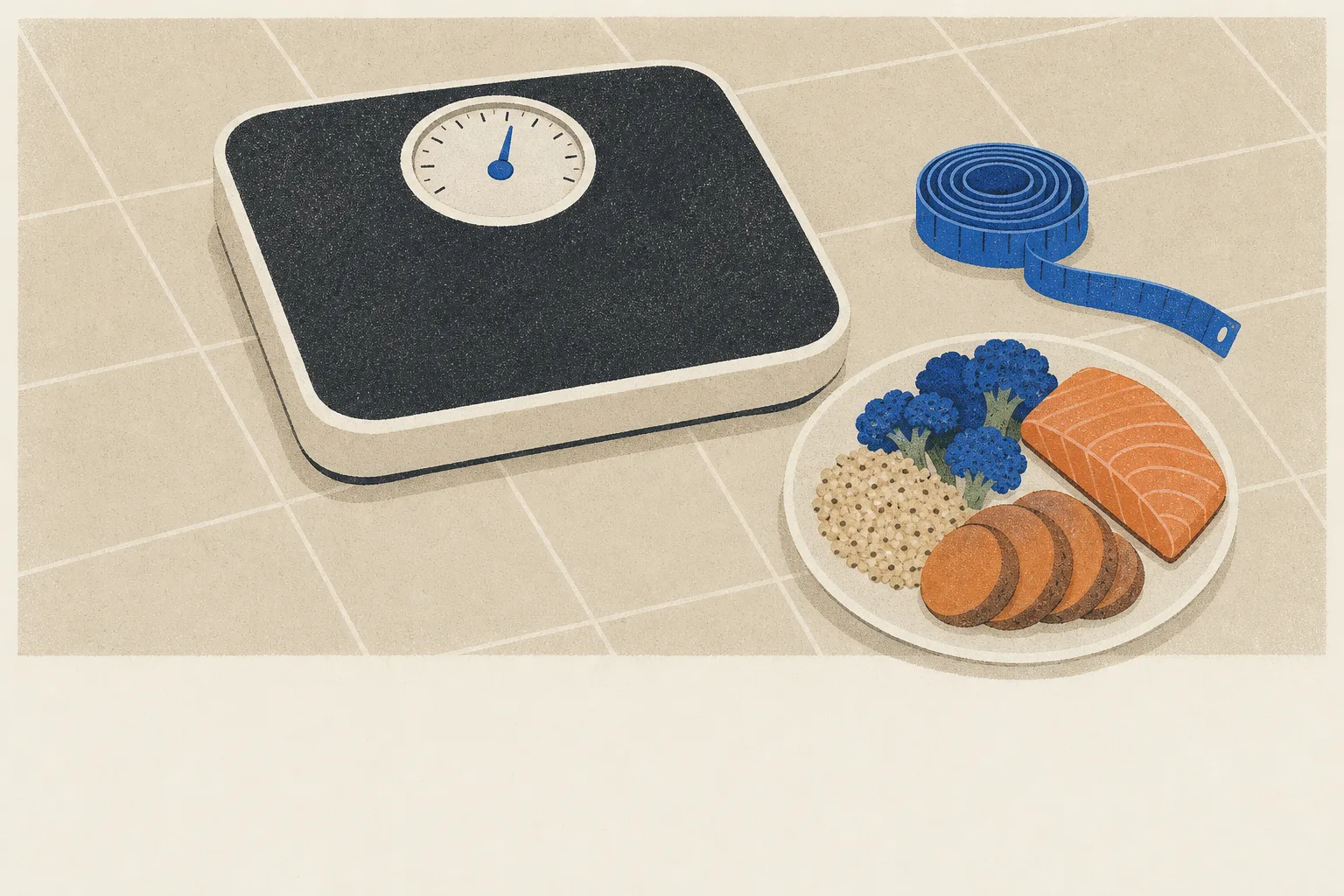
This is the part that trips people up. If your weight has barely changed after a month, it can feel like nothing is happening. But a flat scale during a recomposition phase can genuinely mean fat down, muscle up, weight steady. The two changes cancel out on the number, even though your body is different. Photos, how clothes fit and the weights going up on your lifts all tell you more than the scale alone during this kind of phase.
Who this suits, and who it doesn't
Recomposition tends to work best for people newer to lifting, or anyone coming back after time off, because their muscles still have easy gains available. Someone who's been training hard for years with a tight diet already will find both fat loss and muscle gain much slower to arrive together, and a clearer bulk or cut phase may suit them better. If you're managing a medical condition or have a history of disordered eating, it's worth talking to a qualified professional before restructuring how you eat.
A flat scale during a recomposition phase can mean fat down, muscle up, weight steady, even though your body is different.
None of this needs to be complicated. Keep the deficit small, keep protein generous, keep training hard, and give it enough time to actually show up in the mirror rather than the display under your feet.
Sources
- Editorial: New insights and advances in body recomposition Frontiers in Nutrition
- Comparison of two nutritional protocols in body re-composition of resistance-trained participants
- Body Recomposition: Can Trained Individuals Build Muscle and Lose Fat at the Same Time? NSCA
- Moderate and Higher Protein Intakes Promote Superior Body Recomposition in Older Women Performing Resistance Training PubMed